Friday, December 15, 2006

The explosion of the Farmer

Two steamers, the Farmer and the Neptune, were racing from Galveston to Houston on March 23, 1853. During the race, the Farmer exploded, killing J.M. Reynolds.

A coroner's inquest into Reynolds' death was held at Galveston, the Houston Democratic Telegraph and Texas Register reported a few days later.

The jury decided that Reynolds died from injuries received when the Farmer exploded during the race.

Blame for the explosion was not placed on the owners or agents of the Farmer. In fact, the paper reported, "Gen E.B. Nichols is the principal, if not the sole, agent in this city of the line to which the Farmer belonged, and he informs us that he repeatedly charged Capt. Webb not to engage in racing with the Neptune or any other boat."

Labels: , ,

Friday, December 01, 2006

99 years ago today

The city block located where the Harris County Administration Building sits today was the scene of a large fire Dec. 1, 1907.

Fortunately, no one was killed in the blaze, but three people were injured by falling debris.

What caused the fire was a matter of speculation the following day, the Chronicle reported. Most witnesses at the time heard an explosion just before the fire started.

One such witnesses was H.J. Larson, deputy county clerk. He told the Chronicle in its Dec. 2 edition that while standing at Main and Congress, an explosion appeared to lift the roof of the Dunn Building "several feet and then settle back in place again." By the time firefighters arrived, the blaze spread to other buildings on the same block.

Among the items lost in the fire were federal court papers. The court was located on the top floor of the Houston Theatre Building which was destroyed.

"There was not a vault or safe provided for all of the valuable papers and decrees of the court and except for reports sent to Washington, the court will be without a paper or record to show the disposition of a single case which ever came before the court in this city," the Chronicle reported.

Other buildings destroyed and/or damaged were:

  • The Houston Theatre on Main Street
  • The Julia Sellers Building, Congress at Fannin
  • The Miller Building, Preston at Fannin
  • The Pillot Building, Main Street
  • Three saloons, including the Texas Bar
  • The Levy Brothers Building
  • The J.J. Sweeney Jewelry Company Building, Congress at Main

The Sweeney Company Building, aka the Sweeney, Coombs & Fredericks Building still exists.

In the end, damage was estimated at $477,500 ($9,800,005 in today's dollars).

Labels: ,

Wednesday, November 29, 2006

Fire at the school

Houston (Central) High School burned March 18, 1919. As firefighters worked to put out the blaze, scores of Houstonians gathered to watch them battle the blaze. Hours later, about 900 students gathered near the building to check out the damage.

"As a matter of fact, not many expressions of regret were heard," the Chronicle reported.

Losses were estimated at $167,000 ($2,053,979 in today's dollars). Ten thousand dollars worth of textbooks were also destroyed ($122,992 today).

The paper said electrical problems may have led to the blaze. The school had been considered a fire trap for years.

"About the time the fire department began arriving on the scene, gases in the building exploded and the southwest corner of the structure was blown out," the paper reported.

Labels: ,

Sunday, November 26, 2006

USS Houston

Rather than retell the history of the WWII-era ships named after the city, I wanted to share some items from the ships' history.

First, there were two ships named Houston during WWII. One, a heavy cruiser, was sunk during the Battle of the Java Sea on Feb. 28, 1942. Of the original crew of 1,061, 368 survived. For its efforts, the ship was awarded a Presidential Unit Citation, a copy of which is available at my Web site in a PDF file.

A second USS Houston, a light cruiser, soon followed. This ship also saw considerable action in the Pacific, as seen by the picture below. Long after the war ended, she was scrapped.


Labels: ,

Wednesday, November 22, 2006

43 years ago today


I highly suggest checking out Grady McAllister's Houston Radio History Web site. Scroll down a bit on that page, and you'll find an MP3 of KILT's breaking news coverage of the Kennedy assassination. It's a fascinating peek into what Houstonians were listening to as news poured out of Dallas that day.

The MP3 is about 30 mins long.

Labels: , ,

Sunday, October 08, 2006

Open arms, open doors

This drawing appeared in Wednesday’s Sept. 19, 1900, edition of the Houston Daily Post.

Without such wide, open spaces like the Astrodome, evacuees from Galveston were spread around town.

The drawing shows where some evacuees were staying.

1205 Congress is currently a parking lot across the street from the Harris County Criminal Justice Center, or diagonal to the old county courthouse.

606 Main is across Texas Avenue from Rice Lofts.

212 Fannin is across the street from the Harris County District Attorney’s office.

211 Crawford is now a parking lot north of Minute Maid Park and Franklin.

Turner Hall belonged to the Houston Turnverein and was likely located on a city block bounded by Prairie, Caroline, Texas and Austin.

On Tuesday, four trains and two tug boats arrived in Houston with nearly 1,000 more evacuees from Galveston.

Aside from the places mentioned above, evacuees were also staying at the Lawlor Hotel, Hutchins House, Bristol Hotel (712 Travis), Capitol (Rice) Hotel, Monteflore Hall, Settegast Building (1016 Preston) and Camp Building.

In unrelated news that day, the body of 12-year-old Robert Opperman was pulled from Buffalo Bayou. He apparently had been swimming in the bayou with some friends on Monday when he went under near the water works facilities (sort of across the bayou from where Bayou Place is). Opperman’s body was found the next day and pulled from the bayou at Main Street.

Labels:

Monday, September 25, 2006

Yellow fever blues (Part 2 of 2)

"The present generation can not appreciate the horrors of a yellow fever epidemic. One case would appear, then two or three, and then people would be taken down by the hundreds. In a week the death roll would begin to swell and everything like business, except at the drug stores, would be suspended."

The next time you want to read up on Houston's pre-oil boom days, check out Dr. S.O. Young's "True Stories of Old Houston and Houstonians." It's not available at any bookstore, or at Amazon.com, but it can be found at either the Harris County or Houston public libraries.

Young perhaps left us with some of the best descriptions of how Houstonians reacted to a yellow fever outbreak.

"For the first few days pandemonium broke loose, and then people settled down and waited, in grim desperation, for the inevitable, knowing full well that only a complete exhaustion of material or a frost could stop the ravages of the fever," he writes.

"For instance, every exposed place was inundated with lime and, at night, huge bonfires, composed largely of tar barrels and tar were burned at street crossings."

It's interesting to imagine these bonfires -- designed to keep the mosquitoes away -- burning in what we today consider downtown.

Young also mentions that rumors would spread of the dead coming back to life.

"Dr. Massie died and was laid out. All preparations were completed for burying him, when he came to life. He was placed in bed again and heroic efforts were made to save him, but all in vain. He lived 24 hours and died, the last time for good."

On Sept. 17, 1867, the Houston Daily Telegraph offered some advice for anyone who might begin to feel the effects of yellow fever:

"Have mustard, castor oil, orange leaves, or some other materials for making a sweating tea, on hand, ready at a moment's call."

And finally:

"Let nobody enter the room, from first to last, but the doctor and the nurse. Visitors and friends who come to see the patient and talk with him or her are messengers of death."

Labels:

Wednesday, September 20, 2006

Yellow fever blues (Part 1 of 2)

Fever? Burning eyes? Back and neck pain?

If you had those ailments while living in Houston 139 years ago, you were in trouble.

September 1867 was a particularly nasty time as the town was hit with a yellow fever epidemic. This wasn’t the first time “yellow jack” or the “black vomit” made an appearance. In 1858, 175 Houstonians died of the disease (about 3.6 percent of Houston’s population at the time). The following year, 15 to 24 people were dying at its peak. Before then, yellow fever and cholera killed so many people in such a short amount of time that bodies were dumped into long trenches at the old city cemetery (on West Dallas) and covered without a funeral ceremony.

But in the midst of the 1867 outbreak, the alarm raised by the Houston Daily Telegraph was mitigated by reports that few were dying of the disease.

“The number of cases will doubtless exceed 700. The mortality when we consider the number of cases, is very light,” the newspaper reported on Sept. 15, 1867.

From Aug. 12 to Sept. 14, 105 people had already died of yellow fever. In all, 492 would die by the time the outbreak subsided.

(That number is nearly 6 percent of the town's population. In 1860, Houston had a population of 4,845, according to Census figures. Ten years later, the town had a population of 9,382. For this calculation, the population of Houston at 1867 was estimated at 8,700. To put that in perspective, Houston's population in 2005 was estimated at 2,016,582. Six percent of that is 120,994. It makes one wonder how people today would react if that many residents of one city were to die of a particular disease in the span of a few months. Math experts are more than welcome to correct me!)

Galveston took a harder hit as more that 720 people died there by early September, according to the Handbook of Texas.

Among the dead:
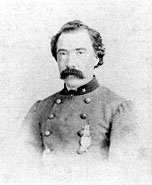
Dick Dowling – Born in Ireland, settled in Houston and became a successful businessman. Among his businesses were Shades (a saloon) and the Bank of Bacchus near the Harris County courthouse. He fought for the Confederacy at the Battle of Galveston and played a key role in its victory at the Battle of Sabine Pass. A statue erected in 1905 that once stood on the site of the old City Hall at Market Square now stands at the entrance of Hermann Park on North MacGregor.

J.F. Wallace – Harris County assessor and collector

M. Bawsell – Deputy postmaster

General Charles Griffin – Born in Ohio, Griffin graduated from West Point in 1847. He went on to fight in the Mexican-American War and led Union troops during the Civil War battles at Antietam and Bull Run. He was present when Robert E. Lee surrendered at Appomattox Court House.
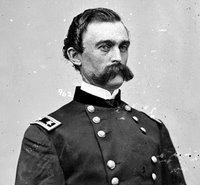
In Texas, Griffin took command of the Freedmen’s Bureau and military district of Texas during Reconstruction. During that time, he became heavily involved in Reconstruction politics.

But as yellow fever began to take hold of Galveston, he was urged to move his headquarters to Houston and establish a military quarantine, the Houston Daily Telegraph reported.

“But, with the true spirit of a soldier, he refused, saying that he was at his post and there he intended to remain,” according to the paper.

Yellow fever claimed his only son during the epidemic. By mid-September, Griffin also was dead.

“All who visited him, whatever differences of opinion might exist between them, came away pleased with him. … He was a stranger among the people of Texas, had fought against them in the war and was their military ruler at the time of his death. … Nevertheless, they feel sad at his untimely death and deeply sympathize with his excellent lady,” the Daily Telegraph reported on Sept. 17.

Labels:

Monday, September 11, 2006

Disaster relief

It didn't take long for Houston to help its neighbor.

Remember when that happened? Just days earlier, a hurricane decimated a major American city on the Gulf Coast. Many were killed or left homeless.

In response, Houstonians organized relief agencies, rounded up supplies and collected donations.
You remember that, right?

Probably not.

It was 1900. On Sept. 10, local residents gathered at City Council chambers for a meeting to coordinate supplies for Galveston. The meeting, led by Judge Norman Kittrell, resulted in the formation of a citizens' committee to take charge in organizing the relief effort. Benjamin Riesner, a blacksmith, was named chairman of the committee. Mayor Samuel Brashear was also named to the committee.

During the meeting, Texas Gov. Joseph Sayers sent Brashear a telegram saying that he had "taken the liberty of directing that all supplies for food and clothing for Galveston be shipped to you."

Three messages were also read:

  • On Sept. 9, G.N. McElroy, an Arcola station agent for the International and Great Northern Railway, sent word to Brashear seeking assistance. "There are 25 or more people here who are in urgent need of relief, quite a number of whom are sick ladies and children. One lady died before being rescued and a little girl is dying from injuries. The sick and homeless people need to be carried to a place of shelter."
  • Houstonian Rosine Ryan offered to volunteer her time to help with the relief effort.
  • Finally, William Randolph Hearst's New York Journal might have been looking for a scoop. "Can you give the Journal an idea of the extent of the calamity as to loss of life and property, what relief measures in your opinion should be inaugurated?"

President McKinley sent a note to Gov. Sayers inquiring about the number of rations and tents Galveston would need.

In the end, Katrina wasn't the first time Houston mobilized to help a storm-ravaged town.

(The above proclamation was published in the Sept. 10, 1900, edition of the Houston Daily Post.)

Labels: ,

Thursday, September 07, 2006

While Galveston suffered...

Houston also took a serious hit from the 1900 storm.

One of the first reported deaths from the hurricane was that of Henry C. Black, a hired driver for funeral director Sid Westheimer.

A Second Ward alderman was going home at about 1:30 a.m. Sept. 9 when he noticed a body lying in a gutter in front of the Wells Fargo Express Company building. A downed power line was lying across the body.

The body was taken to the Houston Daily Post offices and was quickly identified as Black. Officials said it appeared Black was electrocuted by the downed power line.

"There were burns on the hands and on one of the legs, the flesh was seared to the bone," the Post reported.

Black was taken to his home in the 2200 block of Center Street once the storms subsided.

Other damage reported in Houston:

  • The roof of the Post building was torn off, flooding the presses.
  • The windows at the police station were shattered and the roof of the "prison department" was blown off.
  • A house at Tuam and Fairview caught fire after it was blown off its pillars.
  • The roof of the dining room at the Capitol Hotel was blown off.
  • Windows at the Southern Pacific offices at Franklin and Main Street were blown out.
  • The Grand Central depot and its hotel also lost much of its roof.
  • "The roof of on one wing of the Lawler Hotel was blown off and many of the windows in the building were shattered. The guests became alarmed and the crying of the ladies and children increased the excitement."

Labels: ,

Wednesday, August 23, 2006

Bayou City bloodshed


"We met an automobile with a white man in it. They stopped him and Sergeant (Vida) Henry told the white man to get out of the car, but he did not get out, and all the soldiers that was up in front shot the man. I judged that about 50 shots were fired at the man."

This was a sworn statement Leroy Pinkett, an Army private, gave to Houston police.

On this day in 1917, a group of soldiers assigned to Camp Logan marched down Washington Avenue, Shepherd Drive, continued along what is now West Dallas, past Montrose and stopped near Valentine Street, where Founders' Cemetery is located today. Along the way, Houston police officers fired on the troops and vice versa. A few Houstonians, curious about the commotion, were shot dead or bayoneted.

Although tensions between the soldiers and police officers had been strained since the soldiers' arrival earlier that summer, it was rumors over the treatment of an off-duty military policeman that sparked the riot. Rather than restate the specifics of what happened that evening, I've listed some other sites that go into more detail about the event below.

But let's not forget the end results.

Five Houston police officers were killed in the melee:

Rufus H. Daniels, mounted police officer
E.G. Meinke
Horace Moody
Ross Patton, mounted police officer
Ira D. Raney, mounted police officer

Four soldiers were killed:

Capt. J.W. Mattes
Sgt. Vida Henry
M.D. Everton
Bryant W.

Eight Houstonians were killed:

Eli Smith
"Senator" Satton, barber
E.M. Jones
Earl Finley, age 16
A.R. Carstens, painter
Manuel Garredo
Fred Winkler, age 19
C.W. Wright

Military tribunals indicted 118 enlisted soldiers for their part in the riot. Of those, 110 were found guilty. Nineteen mutinous soldiers were hanged, 63 received life sentences and one was judged not competent to stand trial. No white civilians were brought to trial, the Handbook of Texas reports.

Information on the riot can be found here, here, here, and here.
Information on the general who prosecuted the rioters is contained here.
Past Bayou City History posts leading up to the riot are here and here.

A list of HPD officers killed in the line of duty can be found here.

Labels:

Monday, August 21, 2006

On the eve of violence

Relations between black soldiers stationed at Camp Logan and Houstonians (especially the police) were at a breaking point.

Earlier, two black soldiers were arrested for staying out past curfew. On Aug. 21, 1917, the Houston Press reported that a black soldier boarded a streetcar on Washington Avenue and seated himself in front of a white woman.

"When the conductor asked him to observe the Jim Crow law, he pulled a dagger," the paper reported.

The man was arrested by a deputy sheriff, according to the newspaper.

The paper also reported that 3,000 black soldiers would be stationed at Camp Logan. In light of the recent incident, Harris County District Attorney John Crooker allegedly "appealed to voters to rid the town of liquor before these negroes arrive."

Crooker was more than likely siding with the prohibition movement that was in full swing at the time. Numerous news articles were dedicated to the prohibition (pros) and anti-prohibition (antis) movements.

In that same edition of the Houston Press, an anti-prohibition band stirred up a little controversy during a performance at Main Street and Preston Avenue.

"Women with prohibition banners surrounded the musicians. The band quit playing and immediately retired to the Musicians' Club rooms," the paper reported.

But the band played on. A short time later, the band was seen playing on the balcony of the Rice Hotel.

"They gathered below the balcony...and had the band quit playing because it was calling attention to the good women with their banners," the paper continued.

And the band played on again.

"Still later, the women again discovered the band in front of the Rice and surrounded it. This time, the musicians took shelter in the Rice bar. The women picketed the place and the bandsmen left the saloon one at a time."

Labels:

Friday, August 18, 2006

Stormy weather


Does anyone remember what happened in Houston on this day 23 years ago?

How about 91 years ago?

On Aug. 17, 1915, Houstonians were just beginning to survey the damage left by a category 2-3 hurricane that made landfall 26 miles southwest of Galveston. The island city suffered serious damage, but, thanks to the newly constructed seawall, damage was not as severe as the 1900 storm.

Still, Houston suffered heavy losses.

"Hardly a structure in the city was left whole. What the wind did not wreck the rain ruined," the Houston Press wrote.

Among the damage:

* Windows were blown out at City Hall (located where Market Square is today), drenching offices and overturning furniture.

* A large, 50-year-old oak tree in front of the county jail was stripped of most of its limbs.

* Signs, billboards and plate glass windows along Main Street were destroyed.

* Water damaged Mayor Ben Campbell's home.

* Windows at the Ford motor plant were shattered.

* Fences, trees and buildings at Bismark Park (location?) were demolished.

The Handbook of Texas reports 275 deaths as a result of the storm. In 2004, the National Hurricane Center ranked the storm 29th among the costliest tropical cyclones to hit the United States. Adjusted for inflation, damage from the 1915 storm totaled nearly $2 billion.

More photos from the 1915 hurricane can be found here.

More on what happened 23 years ago today can be found here and here.

Labels:

Friday, August 11, 2006

Target: Houston


By 1955, the Cold War was on, and both the United States and the USSR were developing hydrogen bombs.

Houston, a city of nearly 600,000 at the time, underwent preparations in case Soviet bombers decided to drop nuclear weapons on the Bayou City.

In March of that year, the city's Civil Defense department released an evacuation map that Houstonians were urged to follow in an impending H-bomb attack. Considering the Gulf Freeway was the only freeway constructed at the time, residents likely would have faced a tough time getting out of town.

Katy Road, Hempstead Highway, Hardy Road, Mykawa, Almeda and Market were some of the roads identified as evacuation routes. All of the routes were to be one-way, outbound.

"If evacuation is ordered during daylight hours many families will undoubtedly be temporarily separated," the Houston Post wrote.

Here was a rough protocol of what to do, as published in the March 20, 1955, edition of the Post, with help from the city's Civil Defense department:

* A steady, five-minute blast from the city's air raid warning siren was a sign for every resident to tune their radio to 640 or 1240 AM. These were the CONELRAD frequencies that were allowed to operate once the alarm sounded. All other television and radio stations had to stop broadcasting. The order to commence evacuation would have been given over those two frequencies.

(CONELRAD stood for Control of Electromagnetic Radiation. Its purpose was to keep Soviet bombers from being able to home in on specific radio or television stations. By restricting broadcasts to two frequencies, it would potentially be difficult for the Soviets to single out a specific target to attack.)

* The other air raid signal (the one you never hoped to hear) was a warbling sound -- with the tone rising and falling repeatedly.

"This means that evacuation is out of the question. Enemy attack is imminent. You should take cover immediately," the Post wrote.

Motorists had to follow these tips when leaving the city:

* Pick up any persons needing transportation while stopped. Do not pick up pedestrians while your lane of traffic is moving.

* Should your car stall, it must be pushed off the road immediately and abandoned.

By the early 1960s, the chances of enemy bombers dropping bombs within the continental United States seemed pretty remote. ICBM's equipped with high-tech guidance systems posed a bigger threat. The CONELRAD system became the EBS (now EAS) system by 1963.

Freeways rendered this plan obsolete, but we know how effective freeways can be in an evacuation.

Nevertheless, here is the city's current evacuation plan.

The Federation of American Scientists produced a scenario detailing the effects of a nuclear weapon on major cities, including Houston.

More information on CONELRAD can be found here.

Labels:

Monday, August 07, 2006

Famous last words?

On this date in 1917, the Houston Post gave an update as to how the military police were doing at Camp Logan.

"Military policemen are succeeding in keeping good order among the negro soldiers stationed at Camp Logan," the Post reported in its August 7 edition.

Three days earlier, the paper reported that two black soldiers were arrested for being out past their midnight curfew.

"They are N.B. Shelton and Geo. Matahews. Both were turned over to camp authorities," according to the newspaper.

This is one post in a series of entries about the tensions leading up to the Aug. 23 riot.

For more on the riot that would occur in the coming weeks, check out this Web site.

More information on the riot can be found at the Handbook of Texas Online.

Labels:

Saturday, July 22, 2006

Countdown to chaos

On July 28, 1917, more than 600 troops of the 3rd Battalion of the 24th Infantry arrived in Houston from Columbus, N.M., to guard the construction of Camp Logan.

When the United States declared war on Germany, two millitary installations were built in Harris County: Camp Logan and Ellington Field. According to the Handbook of Texas, the move was to take advantage of the climate and the newly opened Houston Ship Channel. Once Camp Logan was completed, the Illinois National Guard would train there.

Accompanying the black troops by train were eight officers.

"The officers, of course, are white men," a newspaper article said.

Initially, the soldiers were welcomed.

"We want the people of Houston to substitute as early as possible for the soldiers coming here the influences of the homes they left behind when called to arms," said William E. Hopkins, representative of the Fosdick national committee on training camp activities.

History shows things went downhill pretty quickly. On Aug. 23, 1917, racial tensions erupted into a riot that placed the city under martial law. The Handbook of Texas says the mutinous black soldiers killed fifteen whites, including four policemen, and seriously wounded twelve others, one of whom, a policeman, later died. Four black soldiers were also killed in the incident. Two were accidentally shot by their own men, one in camp and the other on San Felipe. The troops also killed Capt. Joseph Mattes of the Illinois National Guard when they mistakenly thought he was a policeman. Finally, a sergeant involved in the melee committed suicide.

During the next month, I'll post some articles that highlight the tensions between the soldiers and residents that led up to that day of chaos.

Labels:

Wednesday, June 28, 2006

More pics from 1935 flood (final set)

Milam Street and Congress Avenue


Milam Street, between Commerce and Franklin. Last time I checked, that building was still there and looks pretty much the same from behind. The front has changed somewhat, I think. That's Bayou Lofts (the old Southern Pacific building) in the background.


This is the northeast corner of what's now Jones Plaza!


This is Louisiana Avenue, looking north toward Texas Avenue. The old city auditorium (now Jones Hall) is on the right.

Labels: ,

Monday, June 12, 2006

More photos of the 1935 flood


In the background of the second photo is the old Grand Central Terminal, also known as the Southern Pacific terminal. It opened in 1934 and was torn down in the 1960s to build the downtown post office. More information on that coming soon.

Labels: ,